$55 a bottle. And at that time, it was the highest priced nonalcoholic wine in the market. These aren't byproducts. These aren't mistake wines. So I just I thought it was very important to standardize language, terms, regulations, have a better understanding of the consumer, the stigma around nonalcoholic wine with the trade.
Rachel Martin:And that is a disservice to the consumer. And I wanted to repair that break in the chain. But innovation with alcohol removal is happening right now in aroma capture. These are better products coming into the market. Consumers want them.
Rachel Martin:The trade needs to understand how these products are made, how to sell them, and who these consumers are that are demanding them. Is this gray, real gray area, that 0.5% to 7%? It just it hasn't been explored. So that's why I there was no playbook for me when I did it. So I I think that that is the greatest opportunity.
Vanessa de Souza Lage:Welcome to Nonalcoholic Wine Celebrities, a thirty minute b to b podcast hosted by me, Vanessa De Souza Lage. I'm the founder of vinos.com, vin00s.com. In each episode, I sit down with a professional who's shaping the non alcoholic wine market. So this show is designed specifically for industry professionals, bringing you sharp insights and strategies from the leaders driving one of fastest growing categories in beverages. So thank you so much for being here and taking the time to listen.
Vanessa de Souza Lage:If you're enjoying the show, please follow us on your favorite listening app or subscribe on YouTube. Every listen and every follow helps us keep this podcast alive and bring on high quality guests. So from the bottom of my heart, thank you so much. Happy listening. Hello, and welcome to another episode of the Non Alcoholic Wine Celebrities podcast.
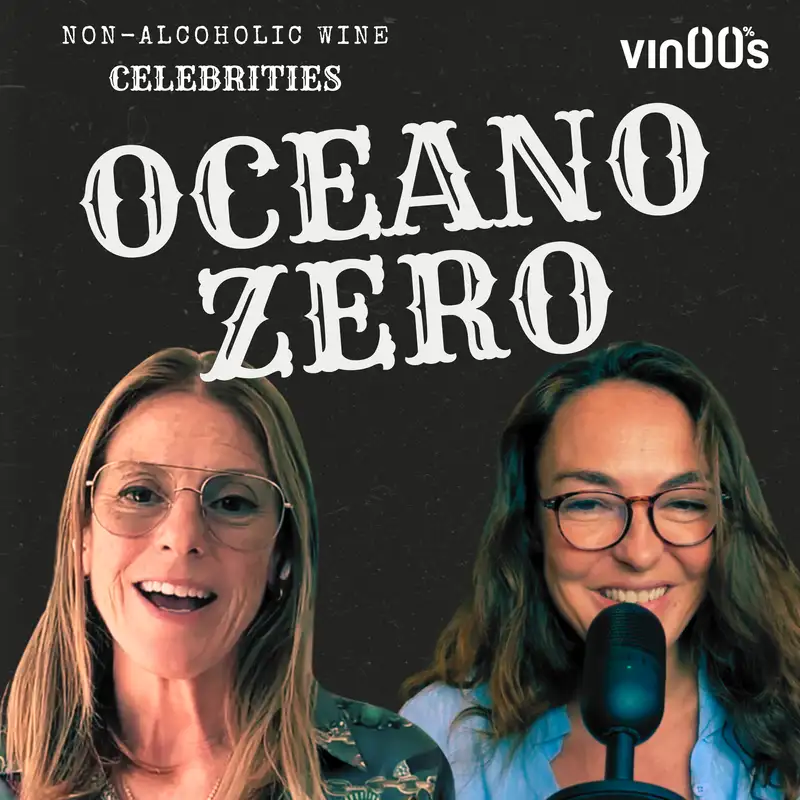
Vanessa de Souza Lage:Today, have the great pleasure to have as my guest, Rachel Martin, who is the founder and CEO of Oceano Wines and creator of Oceano Zero, which is a luxury collection of non alcoholic wines, bridging the gap between fine wine and mindful drinking. She's a longtime winemaker and industry leader. Rachel is also the co founder and program author of Afner Wine Certified, the world's first professional certification dedicated to alcohol free and non alcoholic wine. She's here to share how innovation, education and premiumization are shaping the future of this fast growing category. Thanks so much for being here, Rachel.
Rachel Martin:Thank you so much for having me. I feel so honored to be here and to be selected. Selected. Thank you.
Vanessa de Souza Lage:Thank you. So let's launch ourselves straight into it. My first question is asking you to take us back to the beginning. What sparked the idea for the brand and how did your experience in fine wine shaped the way you approached de alkalized winemaking?
Rachel Martin:Well, it goes way back. I've been in the wine industry as a wine producer. We cited our first vineyard at our family winery in 2002. So it's been a journey, but always with the vision of producing fine wine. Happened to be in Virginia, which is on the East Coast Of The United States that has become very well known for high quality wines.
Rachel Martin:So that informed my then moving to create my own company, Oceano. All of that informed what I was doing with Oceano wines. I have a background in education at the University of Bordeaux School of Enology and a lot of experience with Bordeaux winemakers and growers. And so it really, you know, it's kind of like a calling of sorts. It's really become part of my person, who I am.
Rachel Martin:So I was going along just fine in the wine, regular traditional wine industry. COVID was a really, really tough time for all industries, especially restaurants and bulk of our customers was on premise. And so the slowdown, you know, obviously closures and less people the restaurants, filling the restaurants, less consumption, all kinds of stuff. So I was looking in 2022 for ways to grow my company as I was having issues with the market, frankly, let's just be real here. And so I thought that the non alcoholic industry was very interesting to me in 2022.
Rachel Martin:And it just coincided with my desire to reduce my intake of alcohol. So it's not just like, Oh, this is a business opportunity, but it's something that was meaningful to me and I was open to it. So living in New York City, I have access. At that time, Boisson had multiple retail locations in New York City. So it was easy for me to do market research.
Rachel Martin:So I researched the products, I tasted everything I could find. I spoke to the founders of Boisson. I spoke to the people who worked in the retail. I spoke to the customers that came in. You know, I did my proper research.
Rachel Martin:And what I found was I had a deep empathy for people who are wine lovers shopping at these retailers, either in person or online, and they were having a hard time finding products that they enjoyed. It was kind of like just simple, right? Not only did the non alcoholic wines taste a little weird, smell a little weird, they had the same packaging, right? So it was like a 7.5 wine bottle, but there were no like hallmarks of fine wine. So when you think about people who drink non alcoholic wine, they're not the bargain shoppers necessarily.
Rachel Martin:These are elevated consumers who are savvy about wine. And it's a simple thing that they want is to continue enjoying wine in the way that they love to experience it just without the alcohol. So because of the empty spots, the white space, I thought that I had a place there. And then as I said, it also resonated with me for my own health and wellness. And so it was a match.
Rachel Martin:And then I did all my research and this kind of informed my certification program too. I did all of my research for de alcoholization partners, how you augment these wines after you remove the alcohol. What does the alcohol do? I mean, of course I'm formally trained in sensory science, but to be able to taste for yourself what removing the alcohol, how that changes what we call the wine matrix. So it was not only meaningful to me, I was solving a problem, I had my own personal reasons behind it, I saw a market gap, but it was also really fun.
Rachel Martin:Like I enjoy learning, I enjoy charting new territories. So it was exciting for me, maybe more exciting and terrifying than I've ever felt as a wine producer.
Vanessa de Souza Lage:How interesting. And this was when? This is three years ago in
Rachel Martin:twenty twenty I twenty two when had, I was in a accelerator business program with Goldman Sachs called 10,000 Small Businesses. And we had to choose a growth opportunity for our project. I had wine and barrel. It was real. It was something that I could execute within twelve months or eighteen months as the program requires.
Rachel Martin:And I had wine and barrel. So I was just like, let's do this. So that was my 2022 vintage. And I launched in 2023 with Oceano Zero Pinot Noir.
Vanessa de Souza Lage:Wonderful. Might
Rachel Martin:I add, I'm sorry. Sure, At $55 a bottle. And at that time it was the highest priced non alcoholic wine in the market. And I did, of course, research with people who were experts in the category to see where customer, would this be a go? You know, would this work?
Rachel Martin:And the answer was yes. And it did.
Vanessa de Souza Lage:Well, leads me to my next question, in fact, because you've built that reputation around luxury non alcoholic wine. So how do you define luxury in a category that's still fighting for legitimacy at the end of the day? Don't consumers still think that non alcoholic means less
Rachel Martin:than? Yeah, luxury to me is all about quality of life. And so if our wines improve the lives of wine drinkers, of consumers, of others, how could it possibly be looked at as less than? So if you're looking for a better experience, then you're willing to pay for that.
Vanessa de Souza Lage:For me, it's simple. Like that equation. So your ultra low serum, this was one that really got me. 3.5% ABV, an unusual middle ground, right? What made you want to explore that ultra low space instead of the purely zero point zero?
Vanessa de Souza Lage:Yeah. Hi, this is Vanessa. Just a quick interlude to tell you a little bit more about Vinos. We are a media publishing platform. And we welcome anyone and everyone who is a professional in the the non alcoholic wine market to talk to us.
Vanessa de Souza Lage:If you wanted to be interviewed on this podcast, if you wanted to advertise on this podcast, or, be in our newsletter, If your winery rank higher on our website, if you want to collaborate on our social media, there's plenty of opportunities to partner with us. There's a media pack at the bottom of our website, just the very bottom to the left. Just click media pact media pact and, get in touch with us, or, or you can email us info@vinos.com. Vinos, that's written v I n zero zero s dot com, And we'll be happy to talk to you even if you just want a general chat. Cheers.
Rachel Martin:It's all started from customers, you know, always listen to your customers or your future customers. Just keep your mind open for improvements or expansion. So I had customers asking me, you know, we don't want to be sober. We're just trying to have a better time, have a better experience. We love wine.
Rachel Martin:We love to drink it. We don't want to get wasted. They asked me like, where should I, where could I find a low alcohol or lower alcohol line? And so I was like, shoot, I'm going to make it. So when I was doing some testing in the lab with alcohol removal, I knew that I wanted to go lower than 7% because at 7% you can still over consume.
Rachel Martin:And my customers were looking for something that they enjoyed to drink, but they could, and gave them a little buzz, but they felt that they can maintain control. So it seemed to me that having that 7% made And then of course I did sensory evaluation and landed at 3.5% because it made a better wine. Reduced, I'm looking for the bitterness, so removing or lessening bitterness, still capturing texture and that reticence of aromatic compounds released from the alcohol content. And nobody had done it before. And so it was like another, this is super exciting.
Rachel Martin:Let's do it. Let's be the first. And then I had to research the laws and rules and regulations and figure out, okay, how do I bring this to market without getting in a lot of trouble?
Vanessa de Souza Lage:Yeah, well, I'd love to hear about that. Please tell me.
Rachel Martin:Right. I mean, being in the industry for so long and doing all my own compliance, etcetera, over the years, I became, oh, and I also wrote a petition establishing Middleburg, Virginia as the state's seventh American Viticultural Area. So I became very familiar with the TTB, the Tobacco Tax and Trade Bureau, federal regulation body of alcohol, with their website and how to navigate reading about the laws and the rules. So I'd already done Oceano Zero and I learned all about the FDA, Federal Drug Administration, and the requirements for labeling for non alcoholic wines, which is awesome. Sorry, I love ingredients on labels and I love nutritional facts on labels.
Rachel Martin:I think the more advised and knowledgeable consumers are, more trust and the more they'll enjoy the products. So, okay, I realized, hey, here we are. We've got both regulators involved. So TTB, FDA. So on these labels, have the ingredients, of course, the nutritional facts panel, as well as the government warning for alcohol consumption.
Rachel Martin:So it's kind of like tick, tick, tick all the boxes, make sure I'm covered, but it's fun. I like to research, I like to learn. And I think it's really great to open that door. So if other people are interested, then there it is. They can, you know, whatever, iterate upon it, improve it.
Rachel Martin:There's the rest
Vanessa de Souza Lage:of this. So what's next? Because I want to move on to the certification piece that I really like to explore with you. But before that, if we could just finish on the Oceano Zero story. What's next for you?
Vanessa de Souza Lage:What are new markets, new formats,
Rachel Martin:Oh, yeah. Oh, man. I'm so excited. We're collaborating with an incredibly talented designer. Her name is Christina Ruwallis, and she's known for her self titled fashion brand.
Rachel Martin:And Christina has redesigned our labels and they are stunning. They're energetic. They're unlike anything you've seen in the wine space. And so it's bringing freshness to the category and also connecting with a different consumer. Most wine labels are pretty stodgy.
Rachel Martin:And so we're looking for something that is more modern and resonates with the modern consumer. So I'm super excited about that. So it's labels, website design, experience, and that's just the beginning with Christina. But as far as markets, we really haven't even saturated the markets that we're currently in. We sell out very quickly of our wines and we're focused on our loyalist consumer, our customers that buy from us online.
Rachel Martin:So they're number one. We have seven fifty people signed up for our waiting list for the next drop of Oceano Zero. So they're first. And then we will also work with our wholesale partners or direct partners. We have some wholesale partners, but we also sell direct to online platforms and we'll further support those relationships.
Rachel Martin:So we don't have the ability to expand until we've penetrated the markets that we're currently in, but we want to be sustained in our growth. But eventually, you know, I mean, I love culture. I love travel and I would love to see my wines in The UK and Europe. Wonderful.
Vanessa de Souza Lage:I better get on that waiting list then, because I haven't tried them yet. Okay. So let's move on to the AFNA Wine Certified story. Tell us about it. It's the world first professional certification for non alcoholic wine.
Vanessa de Souza Lage:I have to say I'm taking the course, right?
Rachel Martin:Oh, fantastic.
Vanessa de Souza Lage:Yes, yes. I'm on chapter four at the moment. And it's really interesting. I've learned so much already. And in fact, labeling was a really good whole chapter around that.
Vanessa de Souza Lage:Yeah, it's deep and the laws regulating, but not just in America, you looked at, you know, worldwide, I should say it was really interesting. So why did you feel that the education link was missing?
Rachel Martin:I It's a couple of things. One is the stigma around non alcoholic wine with the trade. And that is a disservice to the consumer. And I wanted to repair that break in the chain. And it's important to educate the consumer as well, but the trade so that they have the tools of understanding the consumer, how to market these products, how the products are made.
Rachel Martin:We talk about first and foremost, these are wines. They start as an agricultural product with grapes and we make them through excellence and intention to be good to great wines, talking about the market in general, good to great wines. And there's just thought, intention along the way. So these aren't byproducts, these aren't mistake wines. So I just, I thought it was very important to standardize language, terms, regulations, have a better understanding of the consumer, how to merchandise market, sensory benchmarks.
Rachel Martin:It's all there in the certification program. It's only going to help serve the consumer and at the same time improve market saturation and profitability for the trade and hospitality. So it's the whole ecosystem it's supporting, And I felt that was, it needed to be done and I volunteered to do it.
Vanessa de Souza Lage:I think it's a milestone for the industry, really. I'm certainly very appreciative of being able to take the course. I've learned so much, as I said. So, you think that restaurants, importance, distributors would expect staff to be a non alcoholic wine trade and certified in the future?
Rachel Martin:If they want to serve the consumer, they will expect that type of standard. Just like, you know, you hire someone to be a sommelier for your wine list. So the consumer can be properly advised or feel at home or whatever it is that non alcoholic wines are lacking on menus. And it's really a problem. And part of that is because the trade, there aren't that many, it's coming down the pipeline.
Rachel Martin:Innovation with alcohol removal is happening right now in aroma capture. These are better products coming into the market. Consumers want them. The trade needs to understand how these products are made, how to sell them, and these consumers are that are demanding them. So yes, I do believe that the trade and hospitality will require their stewards or members to be either I'd love for them to be AFNO Wine certified because it really is a comprehensive program, but they need to have expertise for the standardization of these products in the market.
Vanessa de Souza Lage:So where can I find, can you just tell us the web address if you have it in your mind?
Rachel Martin:Well,
Vanessa de Souza Lage:I I just put it on the show notes. Not a problem.
Rachel Martin:Yeah. Maybe you could put it on the show notes.
Vanessa de Souza Lage:Fair enough.
Rachel Martin:Yeah. That that wasn't able to stick in my mind.
Vanessa de Souza Lage:Well, I'm sure if you type AFNA, A F N A, wine certified, you will find it.
Rachel Martin:It's, oh, right. The web address is alcoholfreeaficionados.com. And then of course, if you want to get on the list, it's oceanowines.com.
Vanessa de Souza Lage:That's right. I'll put both links into the show notes. Thank Great. So let's talk about industry trends in the future. You recently posted I was checking you out on Instagram, Rachel.
Vanessa de Souza Lage:You recently posted about zebra striping, which is a trend of alternating between alcoholic and non alcoholic drinks on the same occasion. How do you see that shaping behavior around wine and can non alcoholic brands turn that into an advantage instead of being seen as the alternative? From
Rachel Martin:my perspective, I see it as abundance. And so it's not binary, it's not either or, it's not a replacement or an alternative, it's a compliment. It's about, you know, it's not like, Oh, I've had my fun and now I'm cut off and I have to drink these non alcoholic products. Because certainly you can begin, you can alternate during your experience. But I think what's really awesome is that it extends the amount of time spent with your friends.
Rachel Martin:So you're going out to have drinks and we say drinks, sometimes it means alcohol, sometimes it doesn't. And we maybe cut the night short because we're concerned about the next day, maybe embarrassing ourselves, safety in getting home, and then how we feel the next day. So it gives you the ability to lengthen your stay or just be like how you wanna show up the next day. These non alcoholic wines are part of a lifestyle. It's not an alternative to alcohol.
Rachel Martin:Not
Vanessa de Souza Lage:an either or. Another one in terms of trends, the regulatory sites where you talked about it a little bit earlier, the regulatory side of non alcoholic wine is still pretty gray, right? From labeling rules to what can even be called a wine. So what are your predictions on how regulation might evolve and what would you like to see change?
Rachel Martin:I think the greatest opportunity for evolution or to expand or even get into is this gray, real gray area, that 0.5% to 7%. And it just, it hasn't been explored. So that's why there was no playbook for me when I did it. So I think that that is the greatest opportunity. Now, and I understand alcohol is a controlled substance and it should be consumed mindfully.
Rachel Martin:So if it has any amount of or is considered alcoholic, any amount of alcohol, 0.5%, 7%, 14%, 16%, it's all regulated in the same way. The barriers exist. If it has, you know, it's considered an alcoholic product, it's harder to distribute. It's harder to get to consumers. And I'd like to see that expanded upon that if it is a lower, say 3.5% or what have you, that the regulations aren't as strict on these ultra low alcohol wines.
Rachel Martin:Now with zero alcohol or non alcoholic wines, I'm quite pleased with it. You know, the ingredients that are in it, you know how many calories, there are ways to deduce from the label. And you'll see this in the AFNA Wine Certified Program of how the wines are made or, you know, what might be used within the products, the sweetening, the calories. And there are clues when you read a label to better understand the health impact from consuming these wines. But I mean, non alcoholic wine, it's free trade.
Rachel Martin:I can sell my Oceano Zero wines directly to trade, to consumers. It reduces friction. It reduces barriers. You don't need adult signature. And this is talking a little bit of United States stuff.
Rachel Martin:But it's better for business, frankly. So it's liberating, not only liberated from alcohol, but it's also liberating for business. And what I would like to see is some of that liberation to these lower alcohol lines.
Vanessa de Souza Lage:Gotcha. Gotcha. Gotcha. I'm talking to someone who helps the European Union regulate soon on the podcast. So I'll ask him about that.
Vanessa de Souza Lage:That would be, What's going on? Yeah. So finally, my last question, looking ahead to 2026. Why do you think what do you think will surprise us most about where the non alcoholic wine industry is heading? What's the big surprise?
Vanessa de Souza Lage:What's the scoop?
Rachel Martin:I think we're going to see more creativity on restaurant lists. I think we're going to see more adoption on maybe, you know, side by side wineries that offer both wines with low and without alcohol on the same list. So I think that there's going to be more attention and respect given to these products. I think that the big unlock or the big reveal is that non alcoholic and low alcohol wines, this market expansion is helping the grape growers who are suffering from retraction. And I know that there was a big boon in planting vineyards and it's a little bit of a reset, but you still have to understand these businesses, these people are suffering because of it.
Rachel Martin:And I think that low and no alcohol wines bring hope back to great growers.
Vanessa de Souza Lage:Wonderful. Thank you so much for this. It's a very nice way of finishing this episode and this interview, which I enjoyed very much speaking with you. Thanks so much, Rachel. Thanks, Have a lovely day.
Vanessa de Souza Lage:You too. Cheers. Bye bye.